The Home Depot
The Home Depot
The Home Depot

Designing a Scalable Delivery Experience

Designing a Scalable Delivery Experience

Designing a Scalable Delivery Experience

As part of the unified selling platform, I helped design a delivery scheduling experience that could support a wide range of fulfillment scenarios across the business. The experience was later adopted as a standalone microservice used enterprise-wide.


Years 2019-2020

Role Product Design, UX Research

As part of the unified selling platform, I helped design a delivery scheduling experience that could support a wide range of fulfillment scenarios across the business. The experience was later adopted as a standalone microservice used enterprise-wide.


Years 2019-2020

Role Product Design, UX Research

As part of the unified selling platform, I helped design a delivery scheduling experience that could support a wide range of fulfillment scenarios across the business. The experience was later adopted as a standalone microservice used enterprise-wide.


Years 2019-2020

Role Product Design, UX Research

The Problem

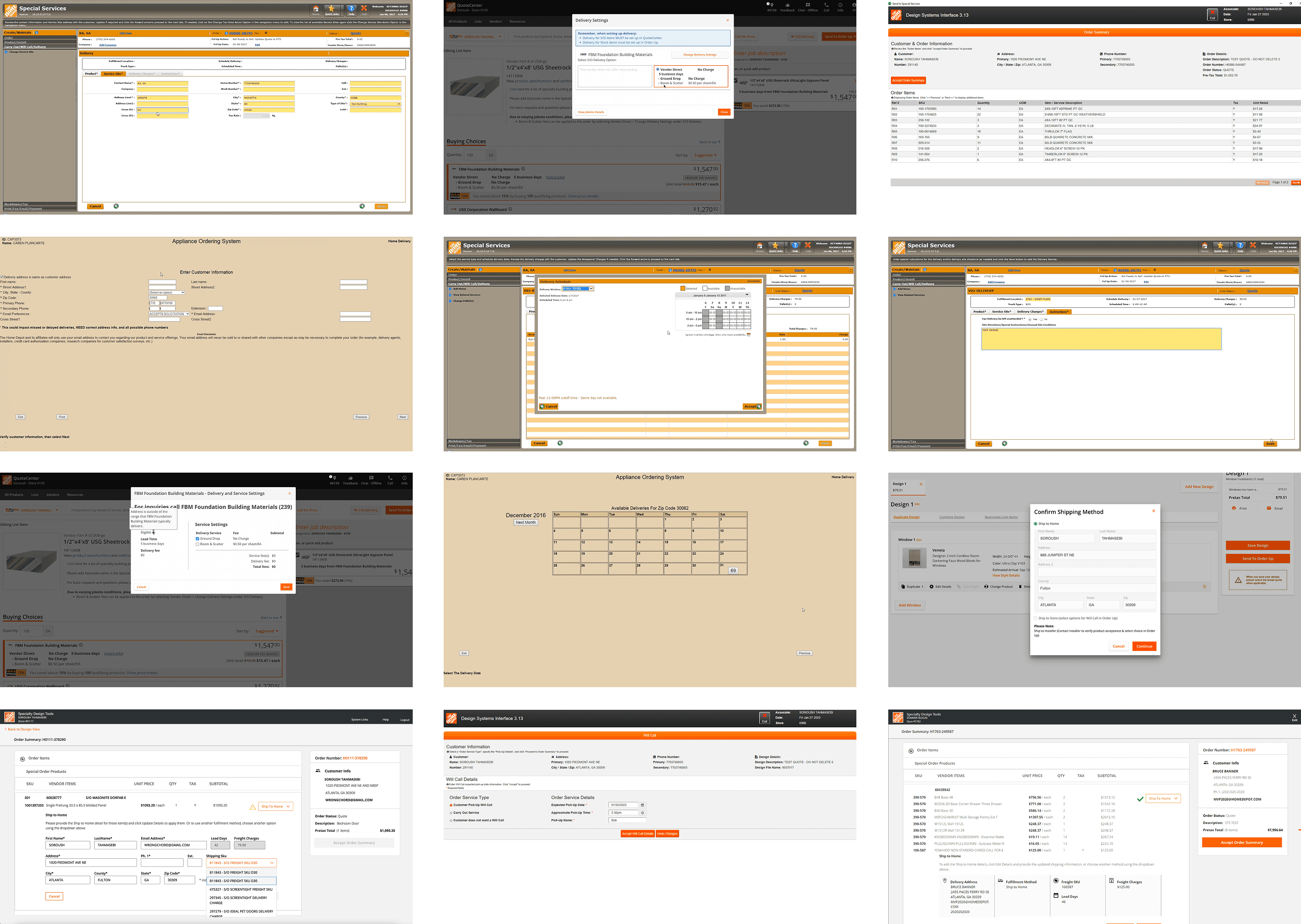
Deliveries were fragmented across multiple systems and networks, each with its own rules, constraints, and service models.

Depending on what was being sold, associates had to navigate completely different workflows to schedule a delivery.

Associates consistently asked for more support from the system, without losing flexibility.
A Simpler Model

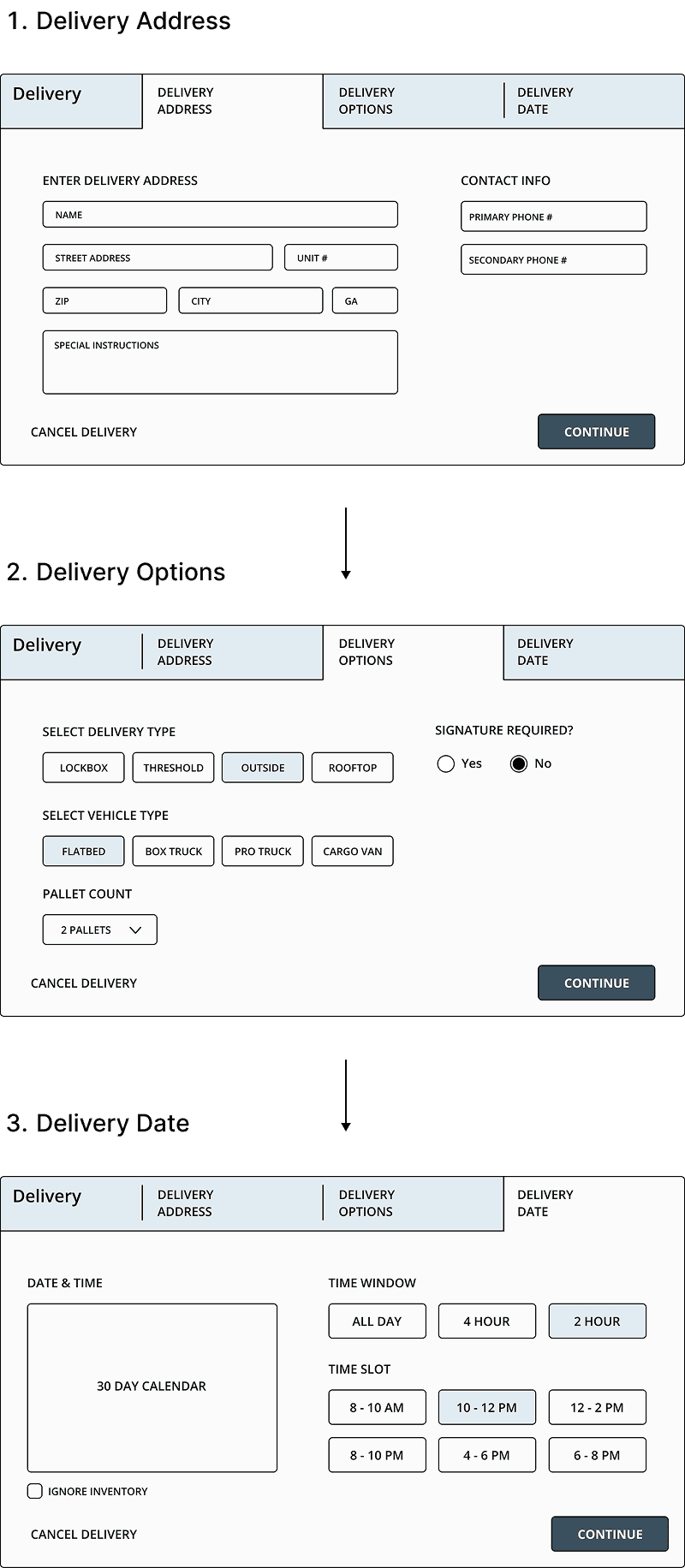
To simplify the complexity, we broke the delivery experience down into three core steps that could scale across all scenarios:

  • Delivery Address

  • Delivery Options

  • Delivery Date

This created a consistent structure for scheduling deliveries, regardless of product type, channel, or fulfillment method.

A stepper was introduced to guide associates through each stage, making the process easier to follow while still supporting more complex scenarios.
The Experience

The Experience

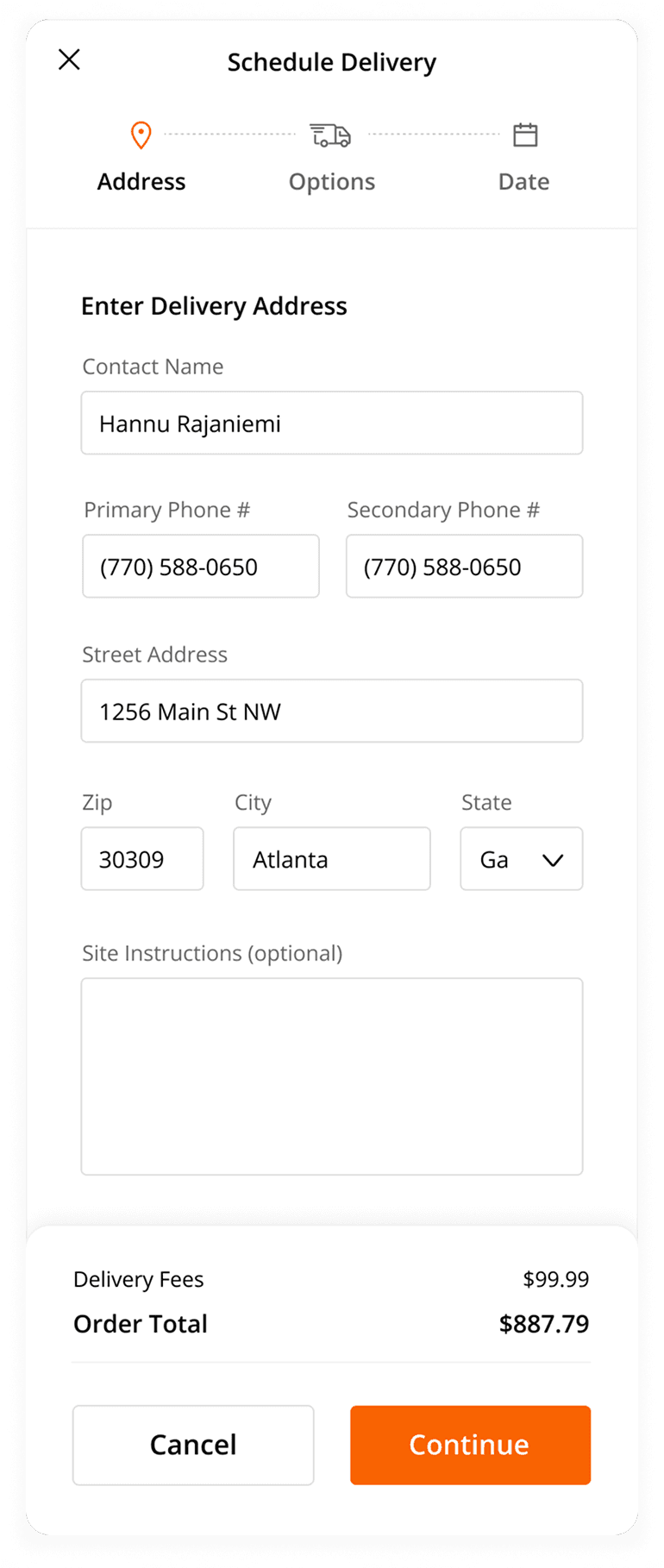
Delivery Address establishes where the delivery is going, pulling in customer and jobsite information directly into the flow.

Delivery Address establishes where the delivery is going, pulling in customer and jobsite information directly into the flow.

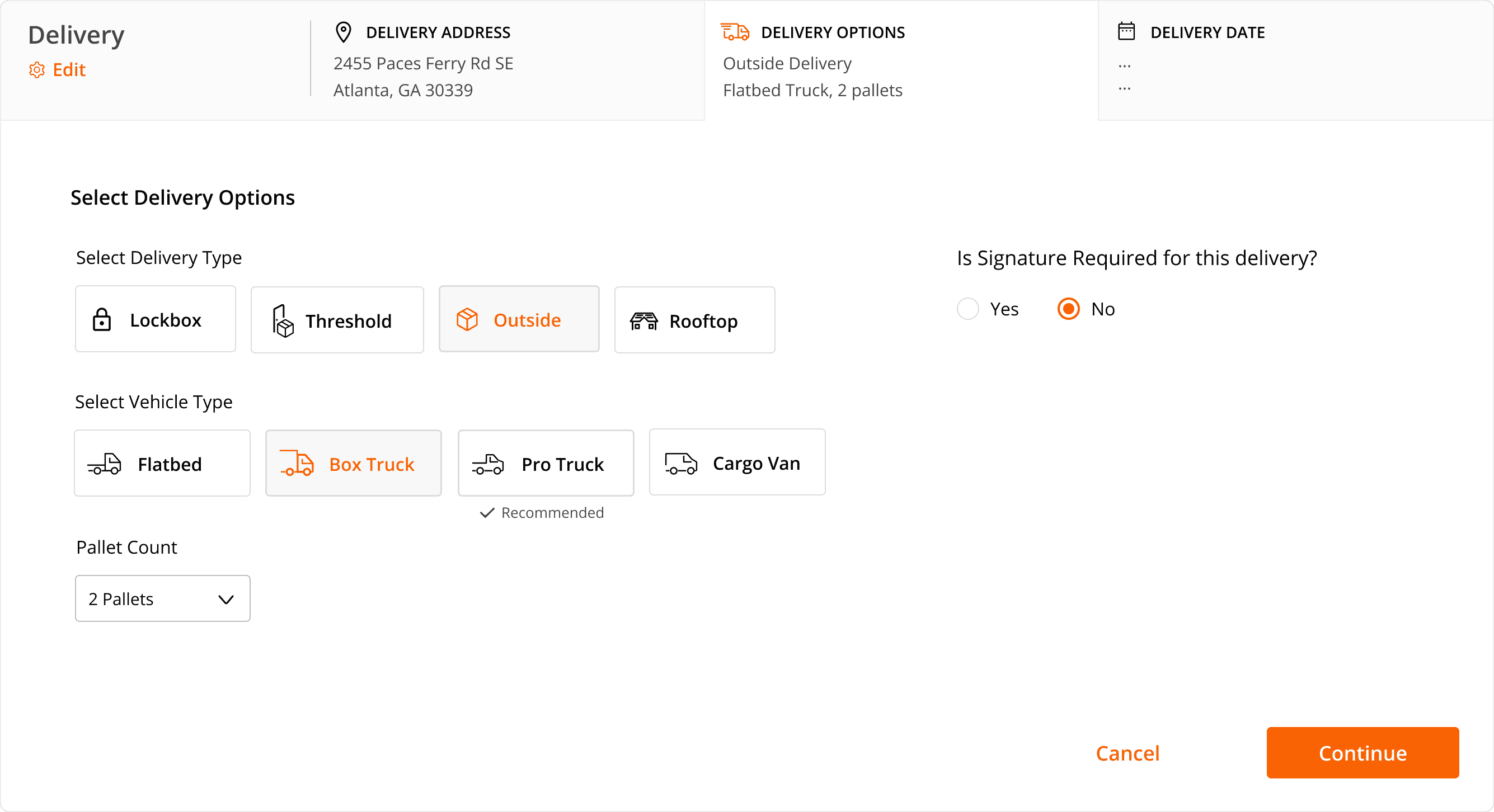
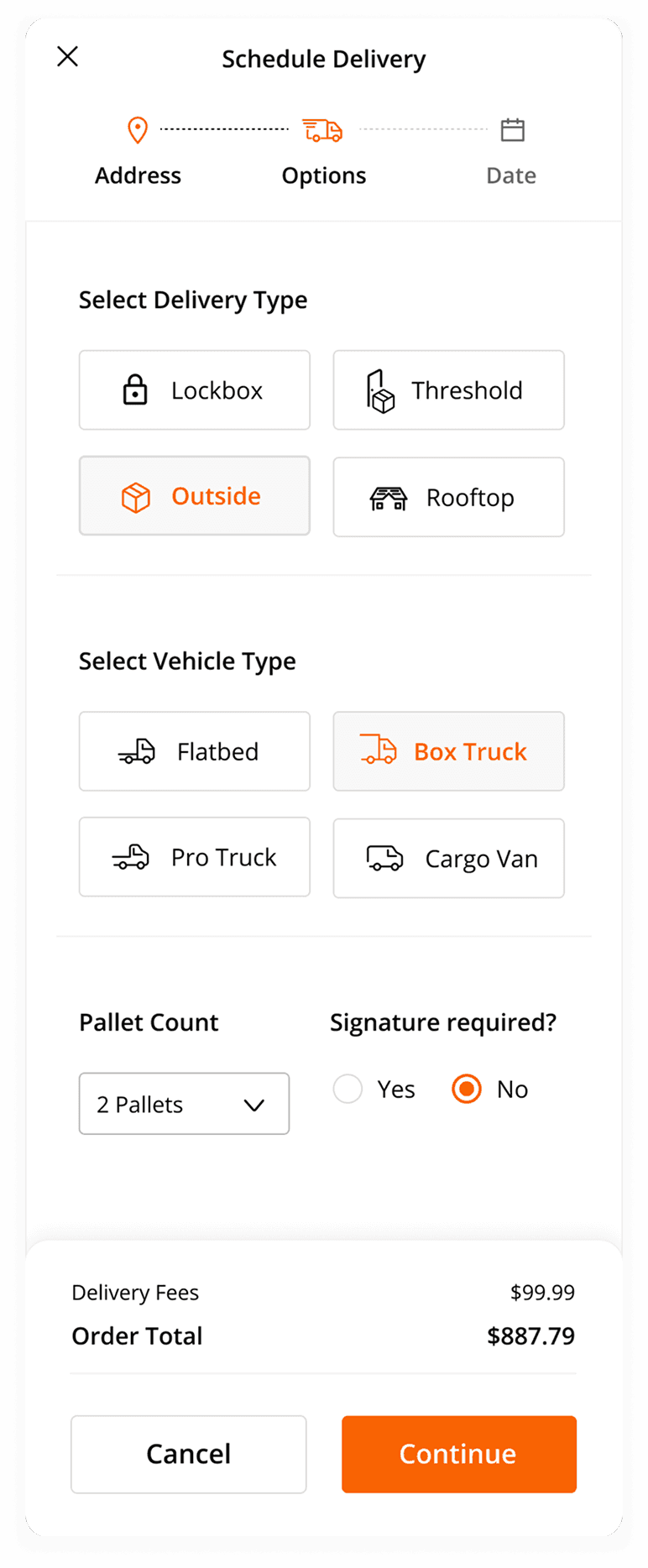
Delivery Options defines how the delivery happens, adapting based on the order while keeping all options visible so associates can quickly understand and choose the right setup. The system preselects the recommended option based on what's in the cart, while still giving associates the flexibility to override it when needed.

Delivery Options defines how the delivery happens, adapting based on the order while keeping all options visible so associates can quickly understand and choose the right setup. The system preselects the recommended option based on what's in the cart, while still giving associates the flexibility to override it when needed.

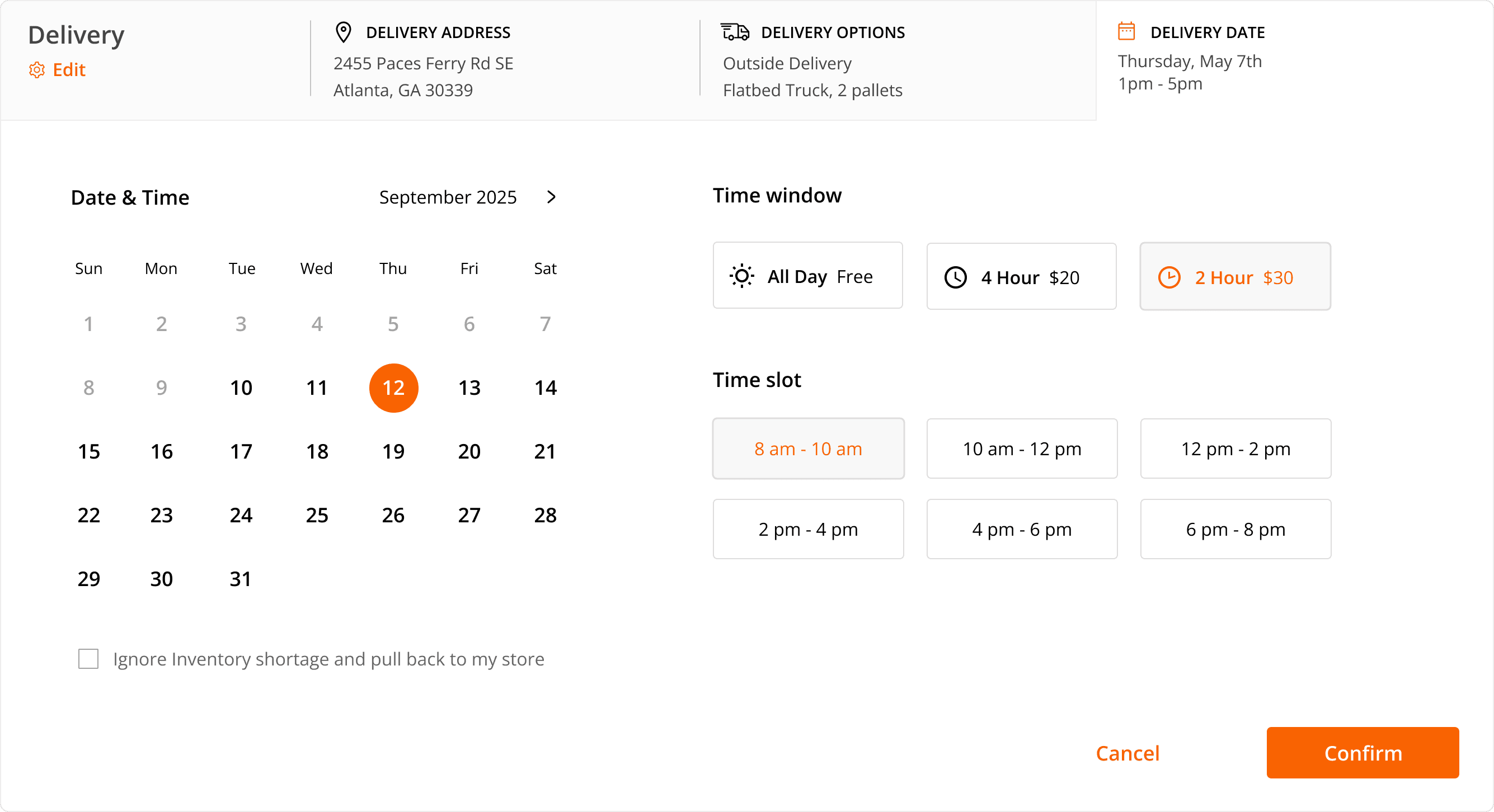
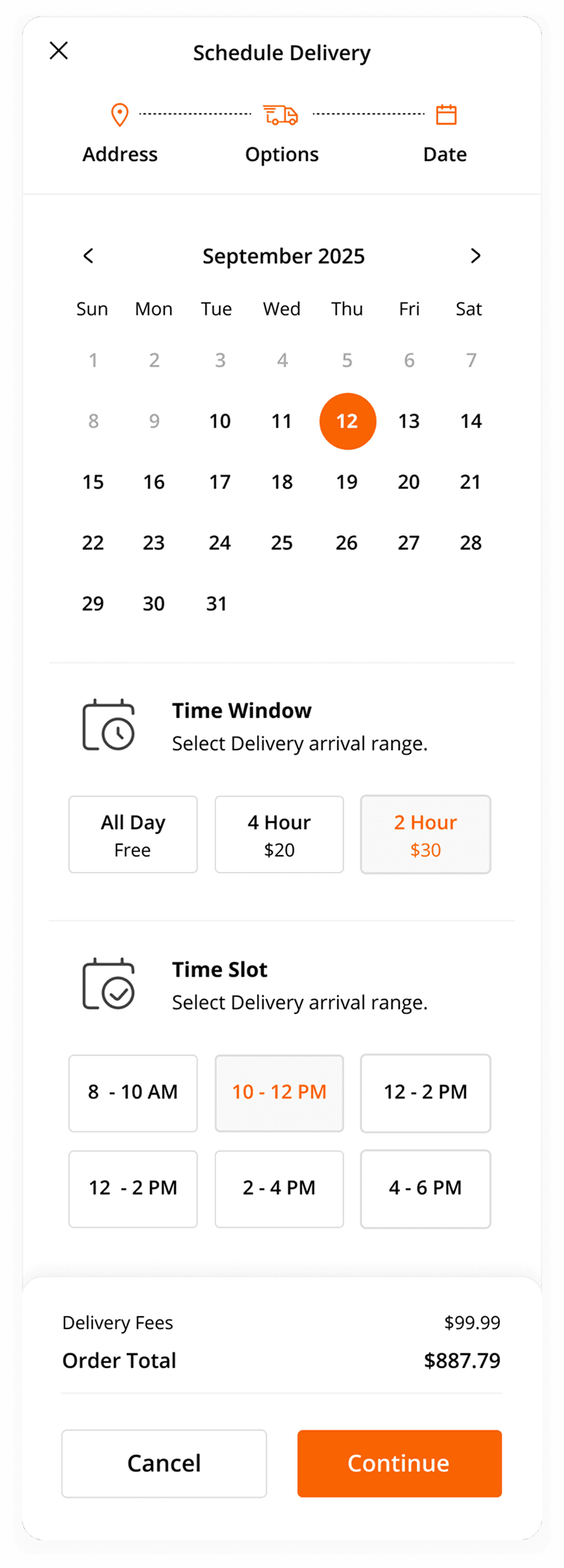
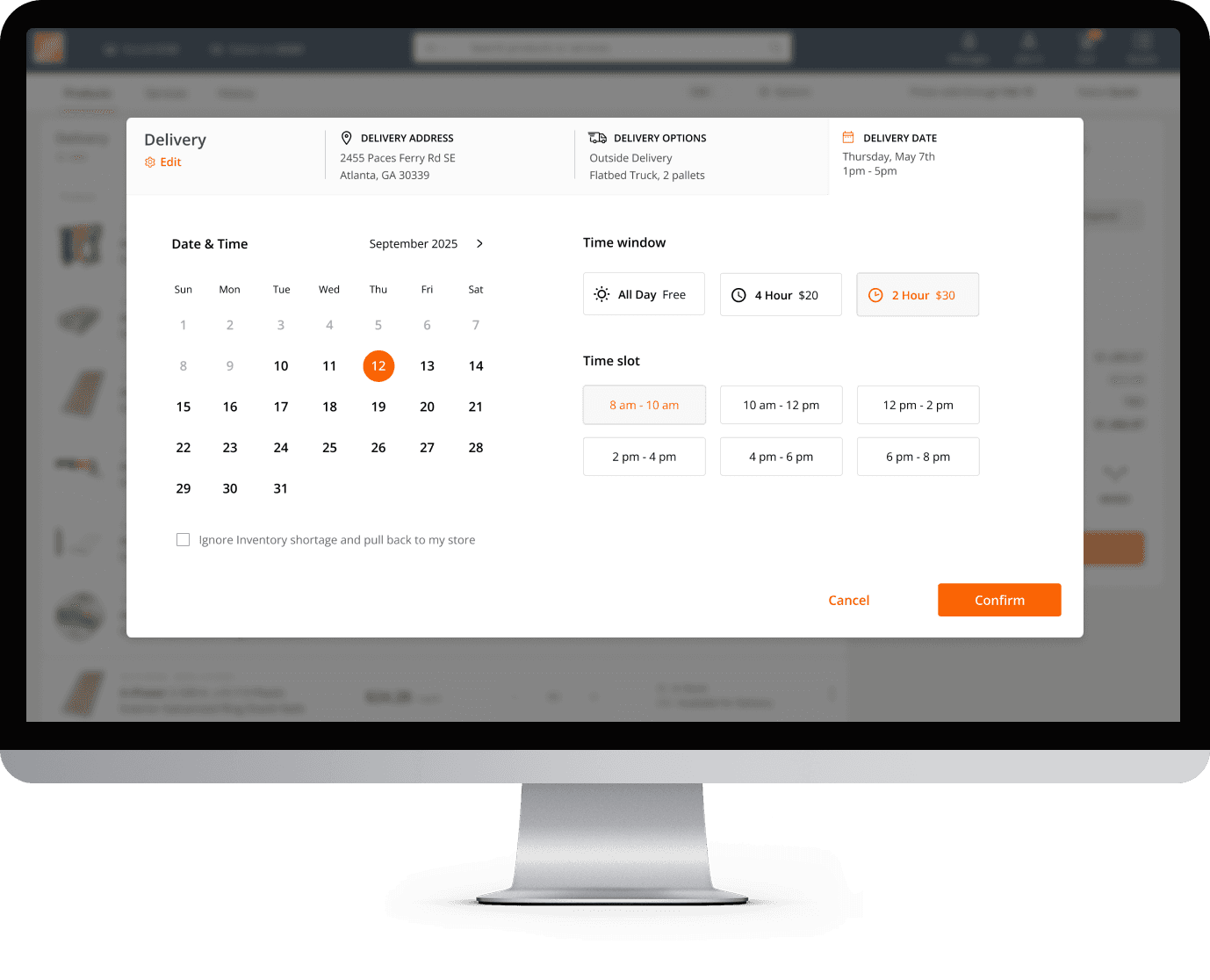
Delivery Date allows associates to schedule deliveries based on availability, with time windows and slots surfaced up front for quick planning.

Delivery Date allows associates to schedule deliveries based on availability, with time windows and slots surfaced up front for quick planning.

Applying the Model

Applying the Model

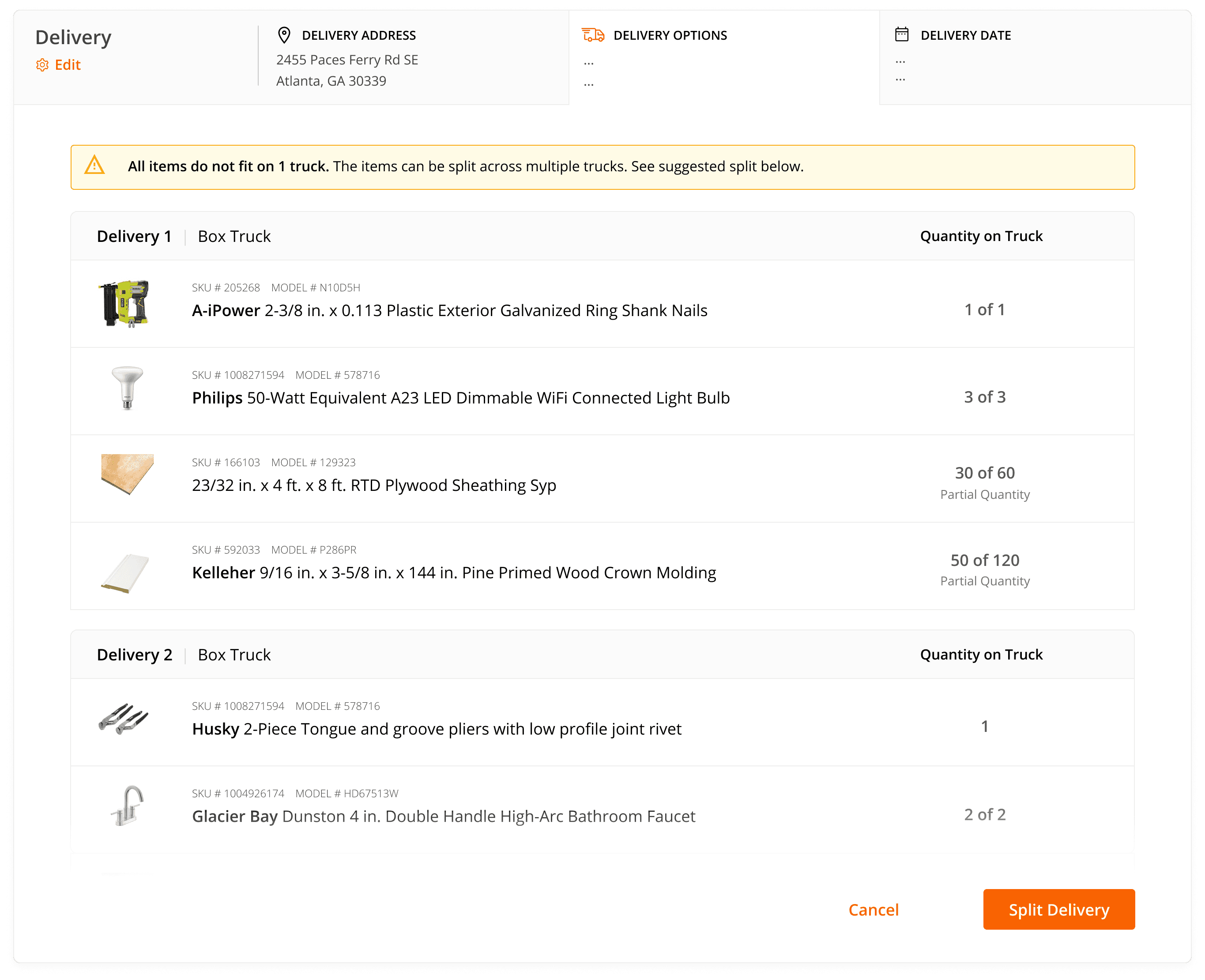
Auto Split simplifies complex delivery scenarios by automatically grouping items into multiple deliveries based on capacity, removing the need for manual trial and error.

Auto Split simplifies complex delivery scenarios by automatically grouping items into multiple deliveries based on capacity, removing the need for manual trial and error.

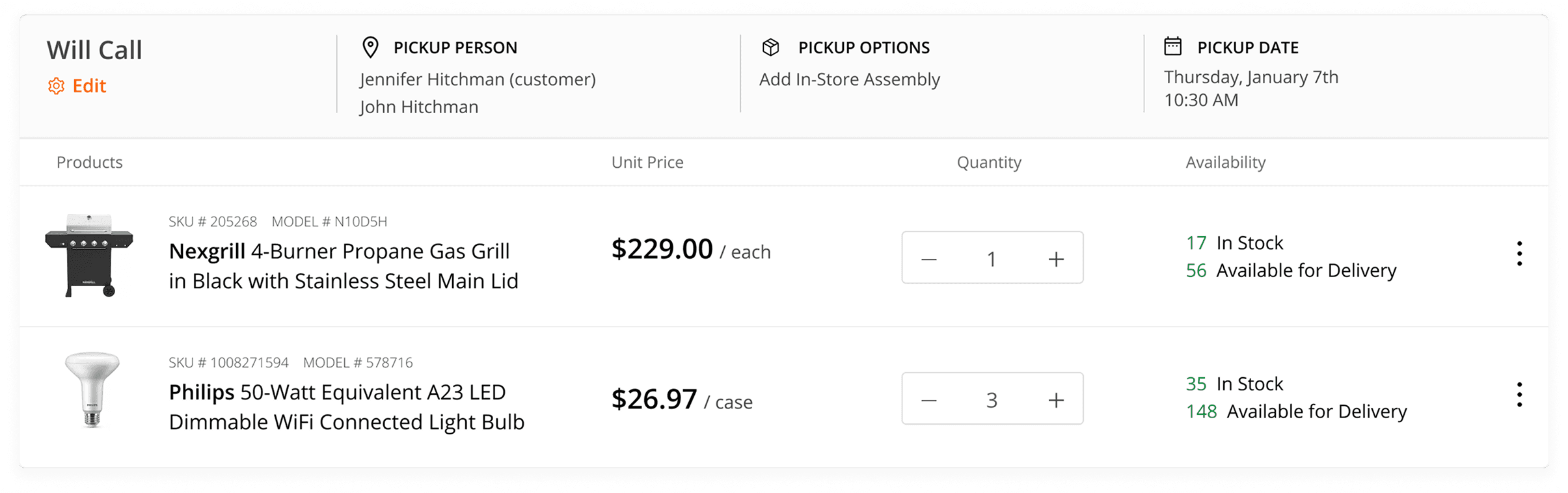
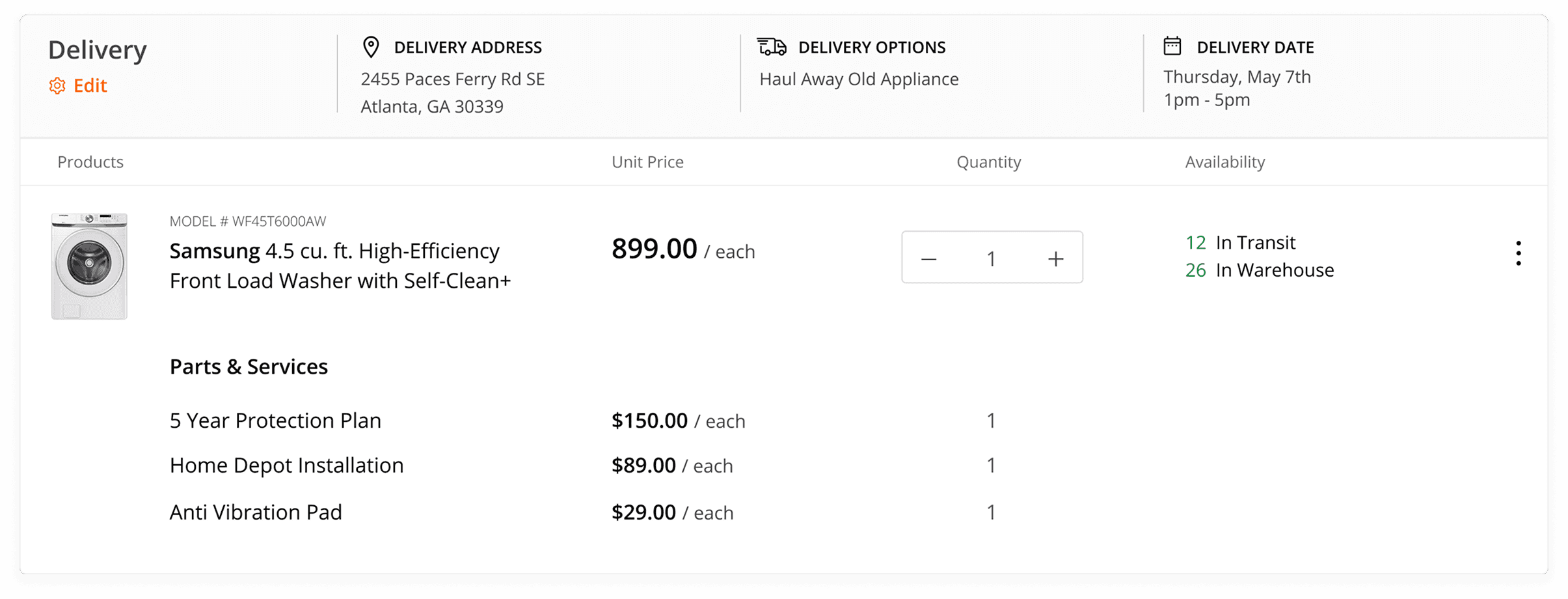
The delivery model extends into the cart, allowing associates to manage different fulfillment types within a consistent structure.

The delivery model extends into the cart, allowing associates to manage different fulfillment types within a consistent structure.

The experience scales to mobile, supporting in-store workflows across devices.

The experience scales to mobile, supporting in-store workflows across devices.

Impact

Impact

This delivery experience was later adopted as a standalone microservice used across the enterprise, and the stepper pattern it introduced became the standard for all fulfillment experiences. It replaced fragmented, rigid workflows with a consistent structure that balanced system guidance with associate control, making it possible for any associate to schedule any type of delivery from a single, unified flow.

This delivery experience was later adopted as a standalone microservice used across the enterprise, and the stepper pattern it introduced became the standard for all fulfillment experiences. It replaced fragmented, rigid workflows with a consistent structure that balanced system guidance with associate control, making it possible for any associate to schedule any type of delivery from a single, unified flow.