The Home Depot
The Home Depot
The Home Depot

Omni-Channel Selling

Omni-Channel Selling

Omni-Channel Selling

At Home Depot, I led the design of their new selling platform and order management platform used by store associates across every department.


The existing experience was spread across more than a dozen disconnected systems, each built for a specific type of selling.


This project rethought that entire model, replacing it with a single, scalable platform that now supports over $24B in annual sales.

At Home Depot, I led the design of their new selling platform and order management platform used by store associates across every department.


The existing experience was spread across more than a dozen disconnected systems, each built for a specific type of selling.


This project rethought that entire model, replacing it with a single, scalable platform that now supports over $24B in annual sales.

At Home Depot, I led the design of their new selling platform and order management platform used by store associates across every department.


The existing experience was spread across more than a dozen disconnected systems, each built for a specific type of selling.


This project rethought that entire model, replacing it with a single, scalable platform that now supports over $24B in annual sales.

The Problem

  • Store selling was fragmented across more than a dozen systems

  • Associates had to constantly switch tools to help customers and manage orders

  • There was no consistent source of truth for order data

  • Associates relied on handwritten notes and workarounds to get through basic scenarios

  • This made it difficult for Home Depot to move fast, launch new initiatives, and innovate


This wasn't a UI issue. The system itself was broken. The entire selling experience needed to be rethought.

Understanding the Problem

I started by going into stores and spending time with associates across departments, observing how they actually worked.


I focused on understanding their workflows, what they were trying to accomplish, and where things were breaking down.


I brought my product and engineering partners into that process early, so we could align on what we were seeing firsthand.


From there, I mapped out workflows, system dependencies, and failure points to piece together a clear picture of how fragmented the experience had become.

A Simpler Model

When we stripped away the complexity of the existing systems, most selling scenarios followed the same underlying pattern:


  • Searching for a product or service

  • Evaluating or configuring it

  • Managing the quote or order


I used this to define three core parts of the experience:

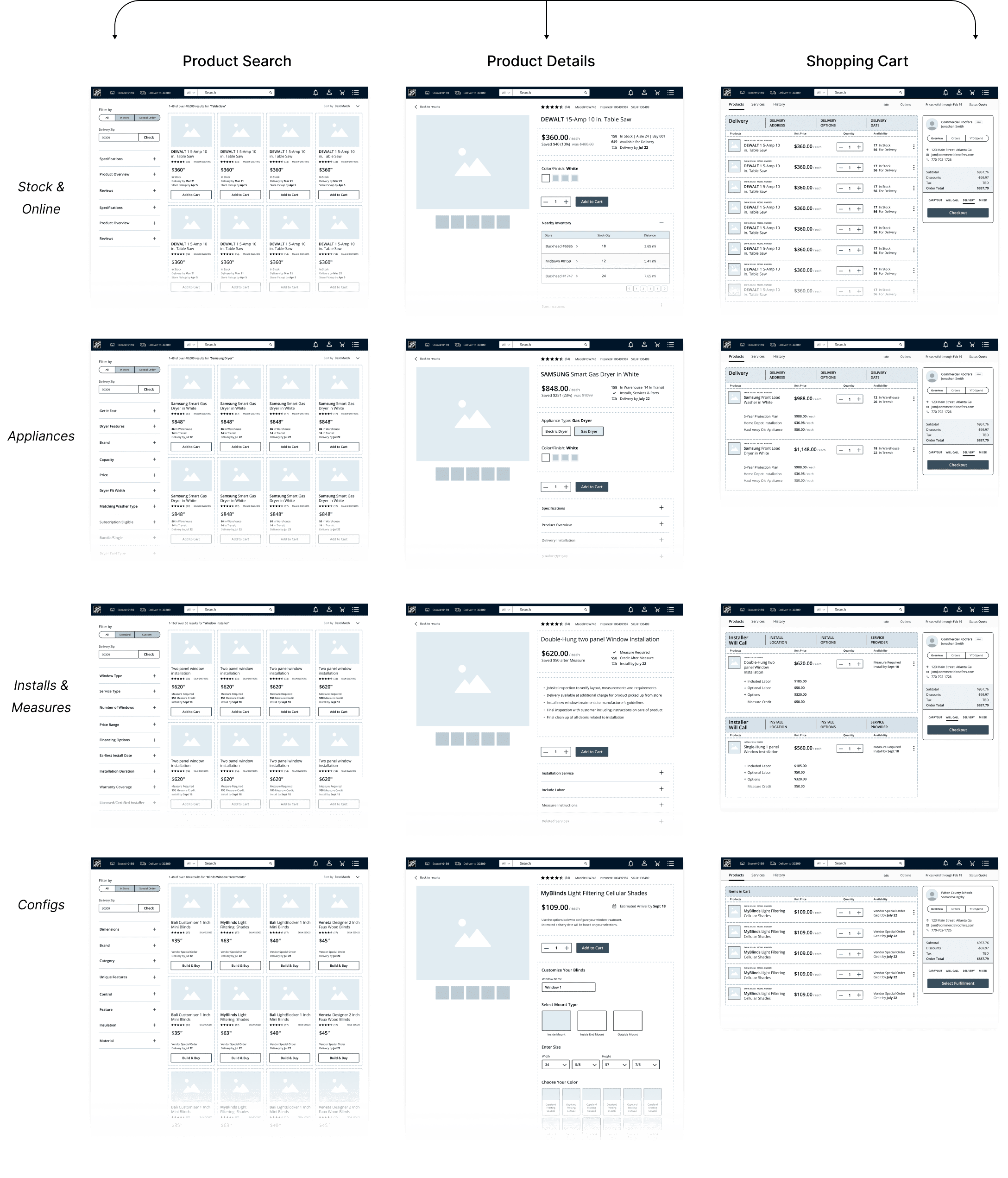
Product Search, Product Details, and the Shopping Cart.

The System

The System

The experience was built around three core pages, each designed to adapt across different product types, services, and scenarios.

The experience was built around three core pages, each designed to adapt across different product types, services, and scenarios.

Product Search

Product Search

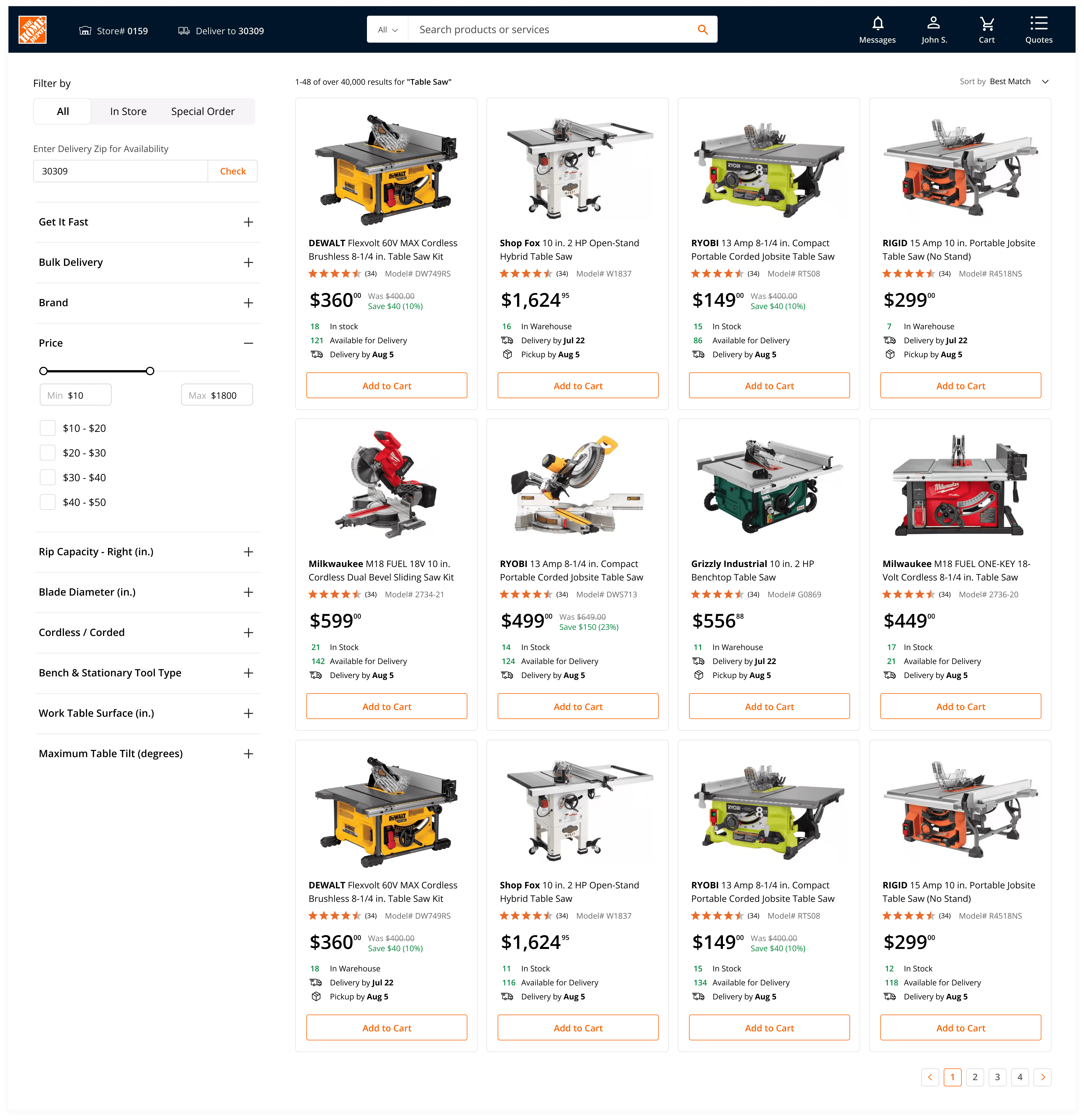
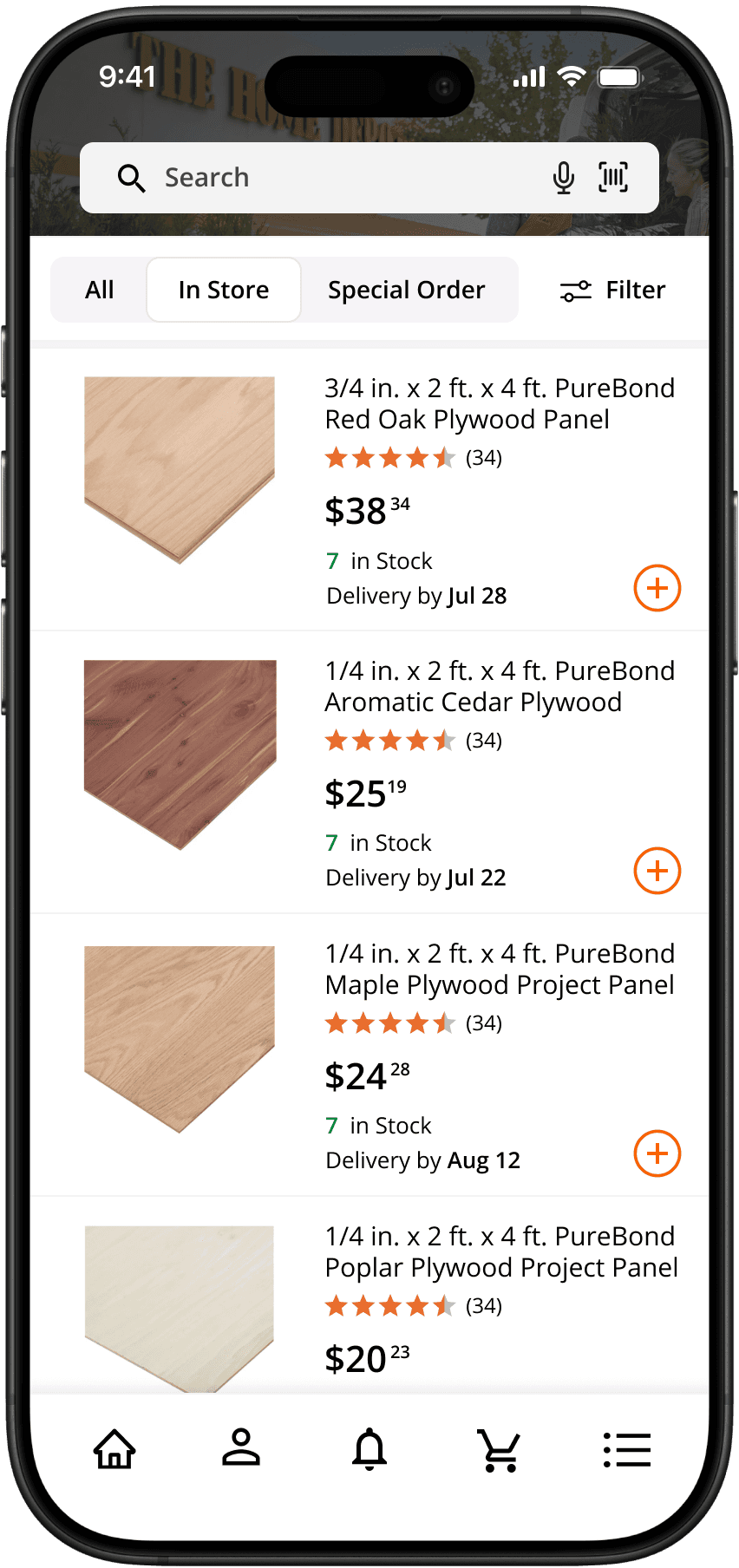
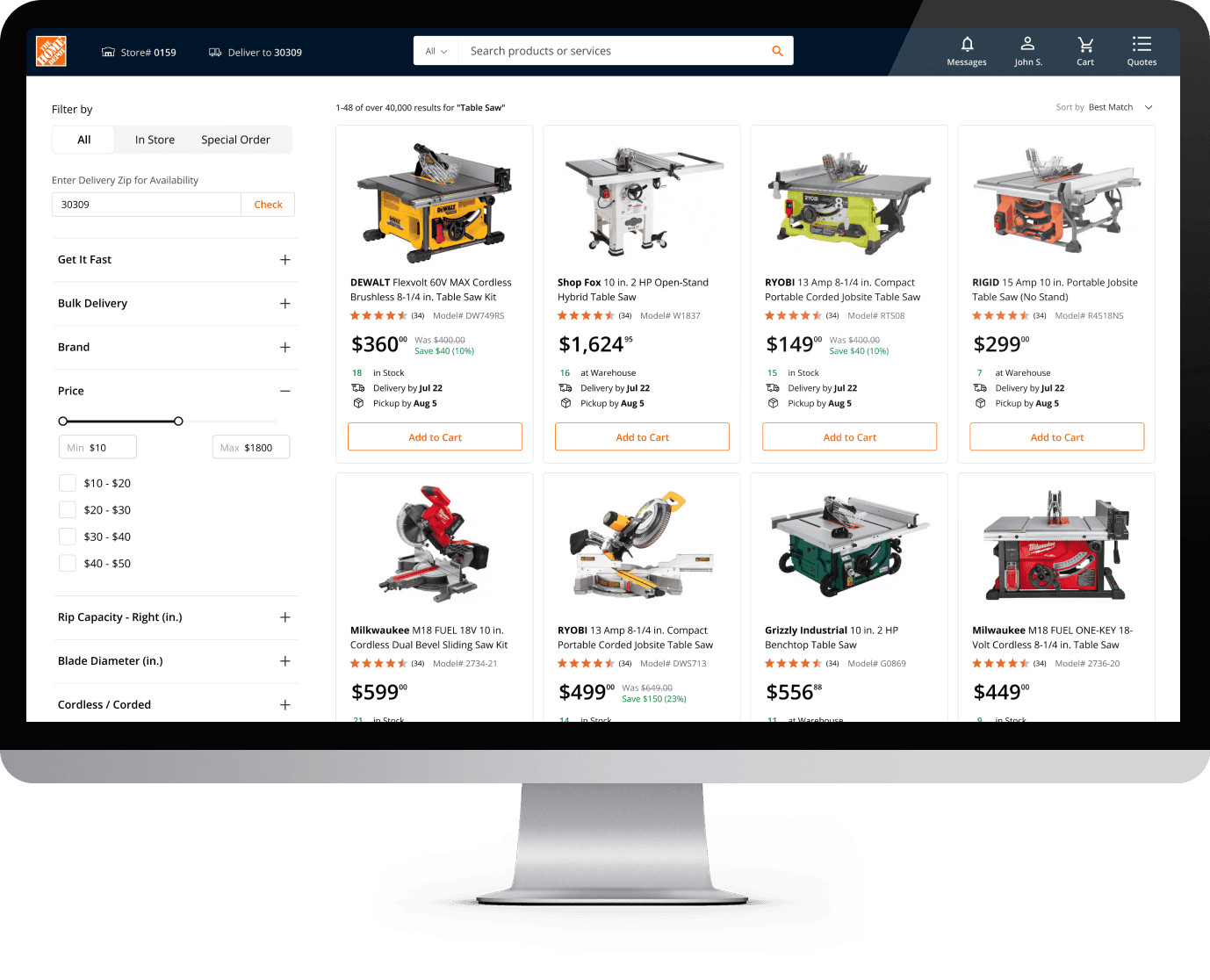
For the first time, associates could search across all Home Depot catalogs and services in one place. This removed the need to switch between systems and made it possible for any associate to help customers across departments.

For the first time, associates could search across all Home Depot catalogs and services in one place. This removed the need to switch between systems and made it possible for any associate to help customers across departments.

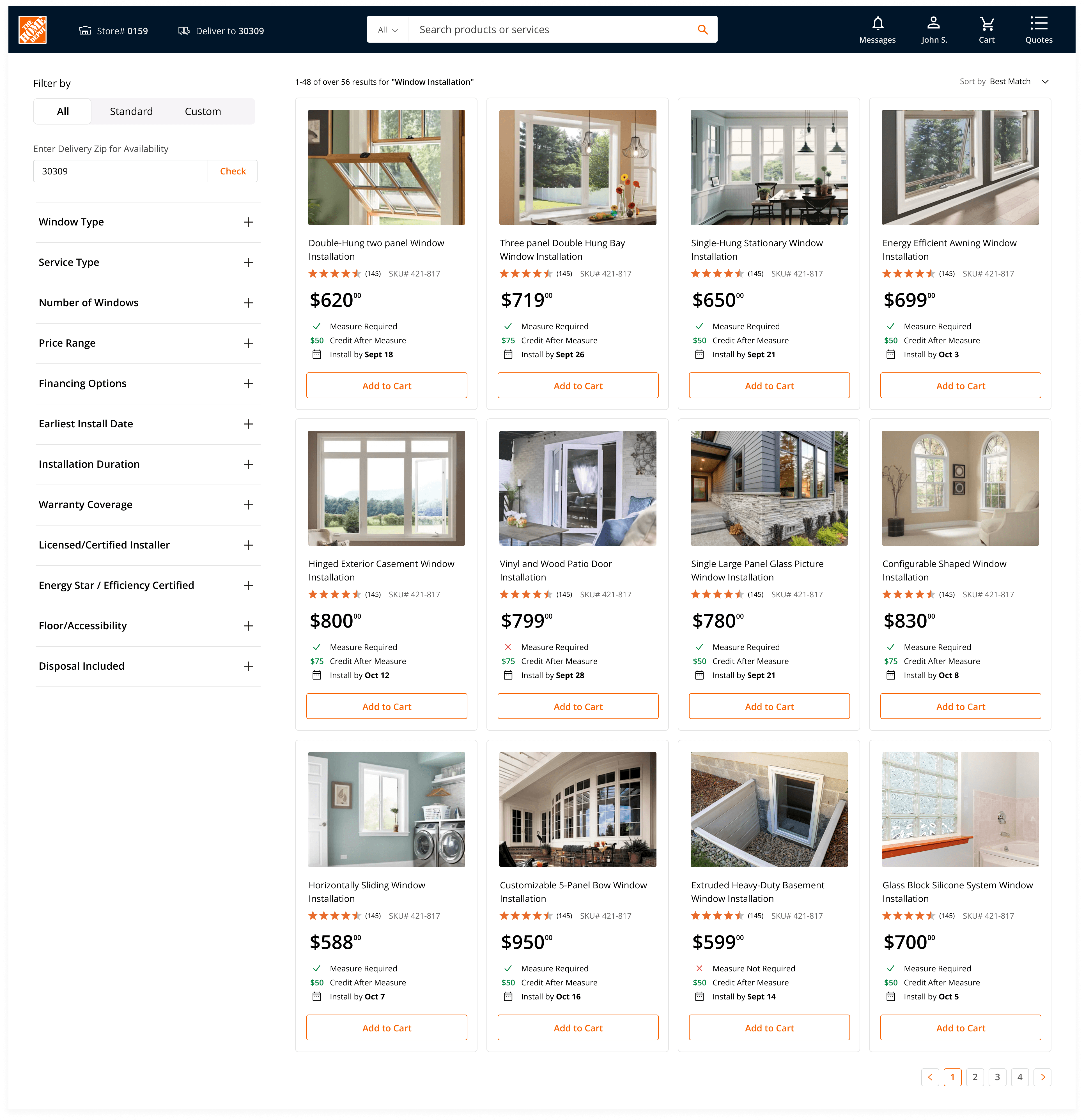
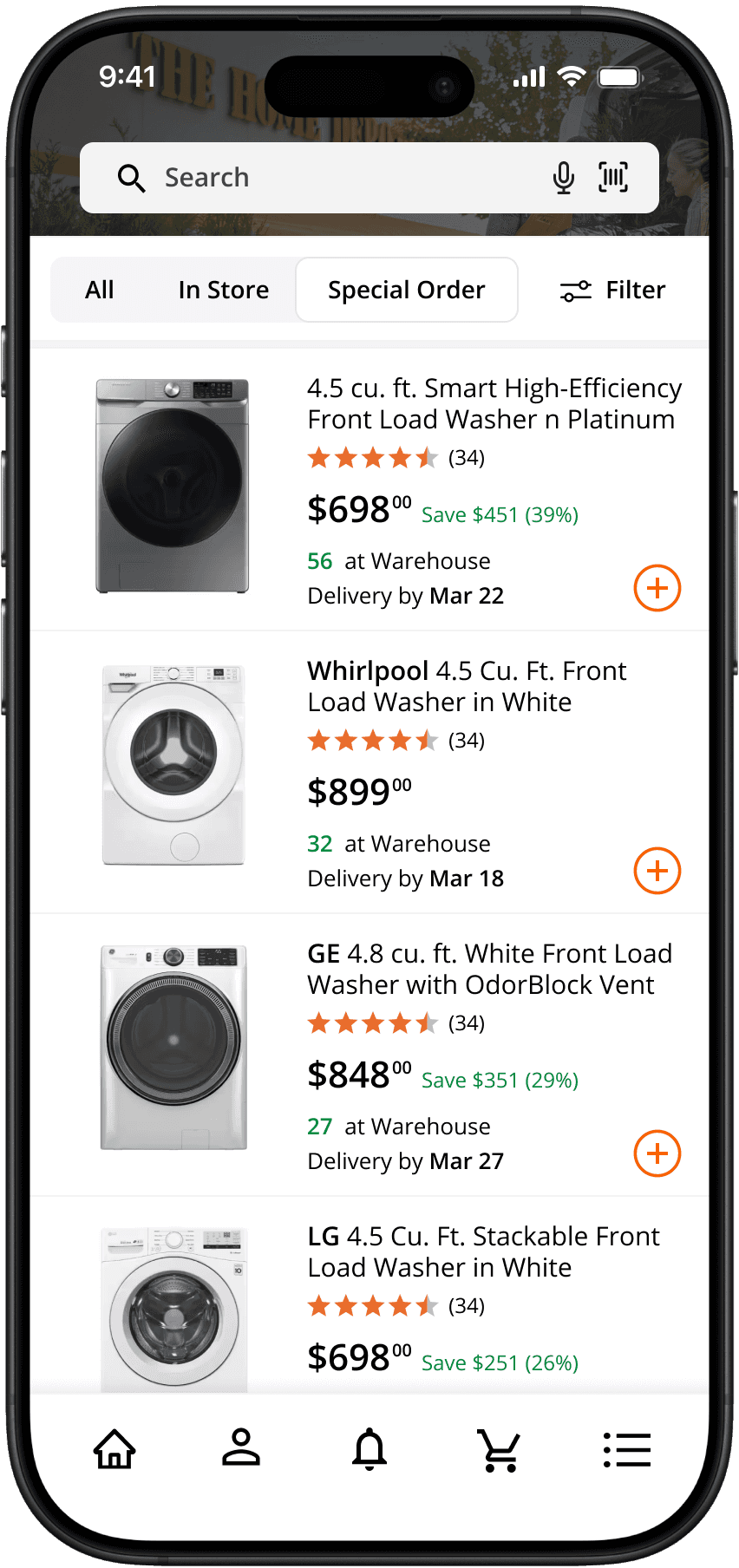
Product cards surface key information upfront, allowing associates to quickly scan and move forward. The same structure adapts across product types and services, so associates always know where to look.

Product cards surface key information upfront, allowing associates to quickly scan and move forward. The same structure adapts across product types and services, so associates always know where to look.

Product Details

Product Details

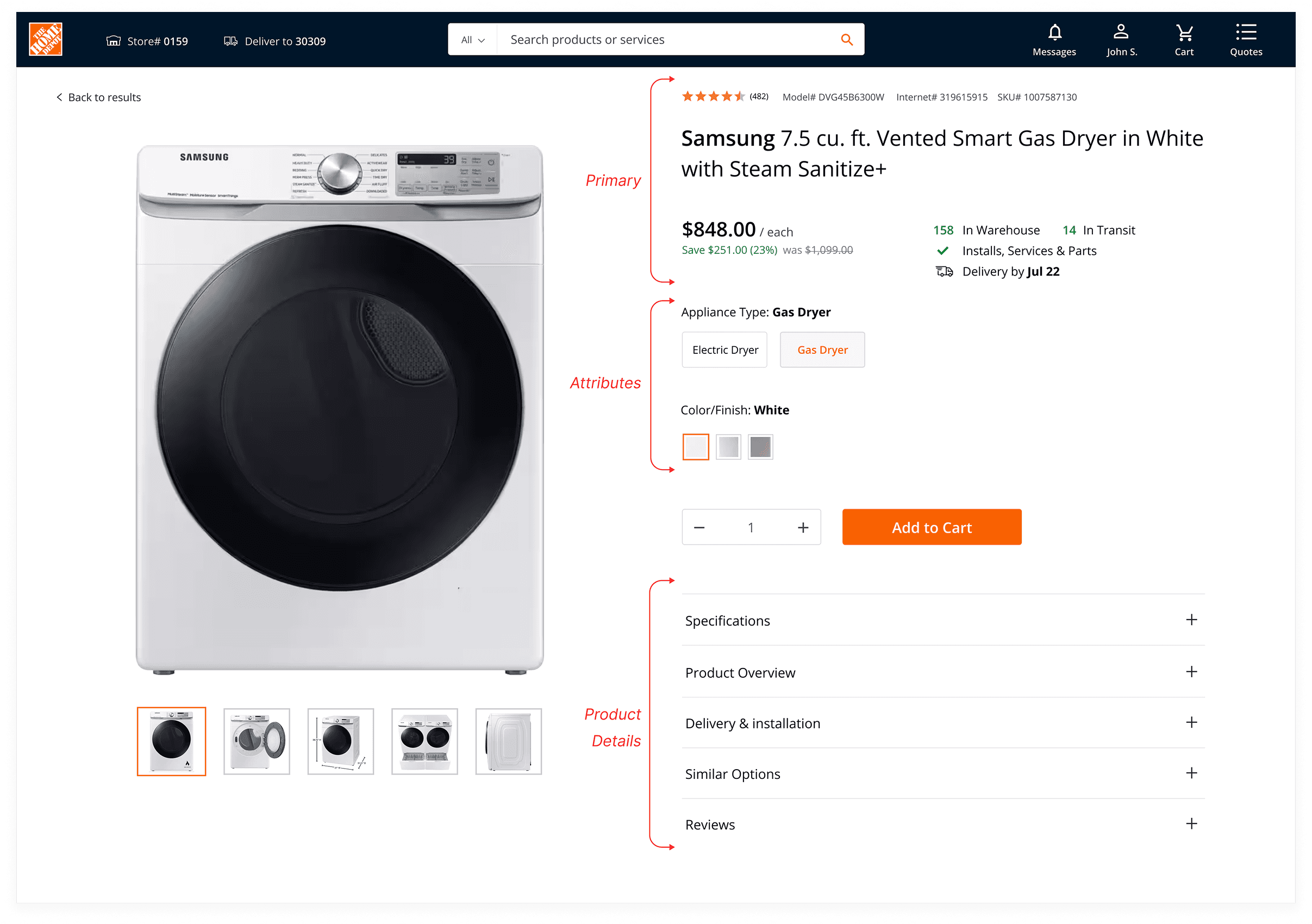
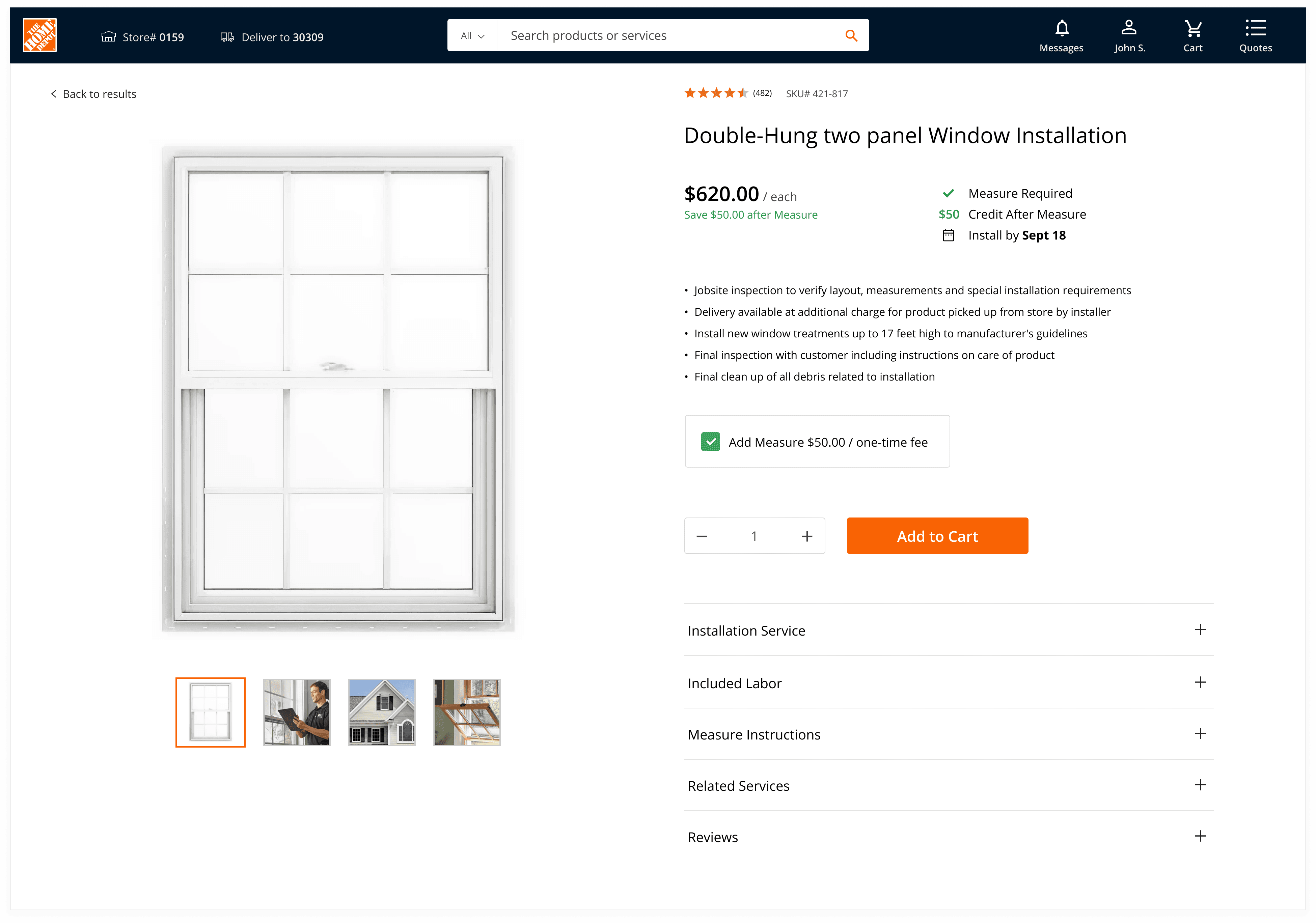
The Product Details page was designed to handle a wide range of product types within a consistent structure, allowing associates to quickly understand key information and move forward, even in more complex scenarios.

The Product Details page was designed to handle a wide range of product types within a consistent structure, allowing associates to quickly understand key information and move forward, even in more complex scenarios.

Information is organized into clear layers, making it easy to scan what matters first and access deeper details when needed.

Information is organized into clear layers, making it easy to scan what matters first and access deeper details when needed.

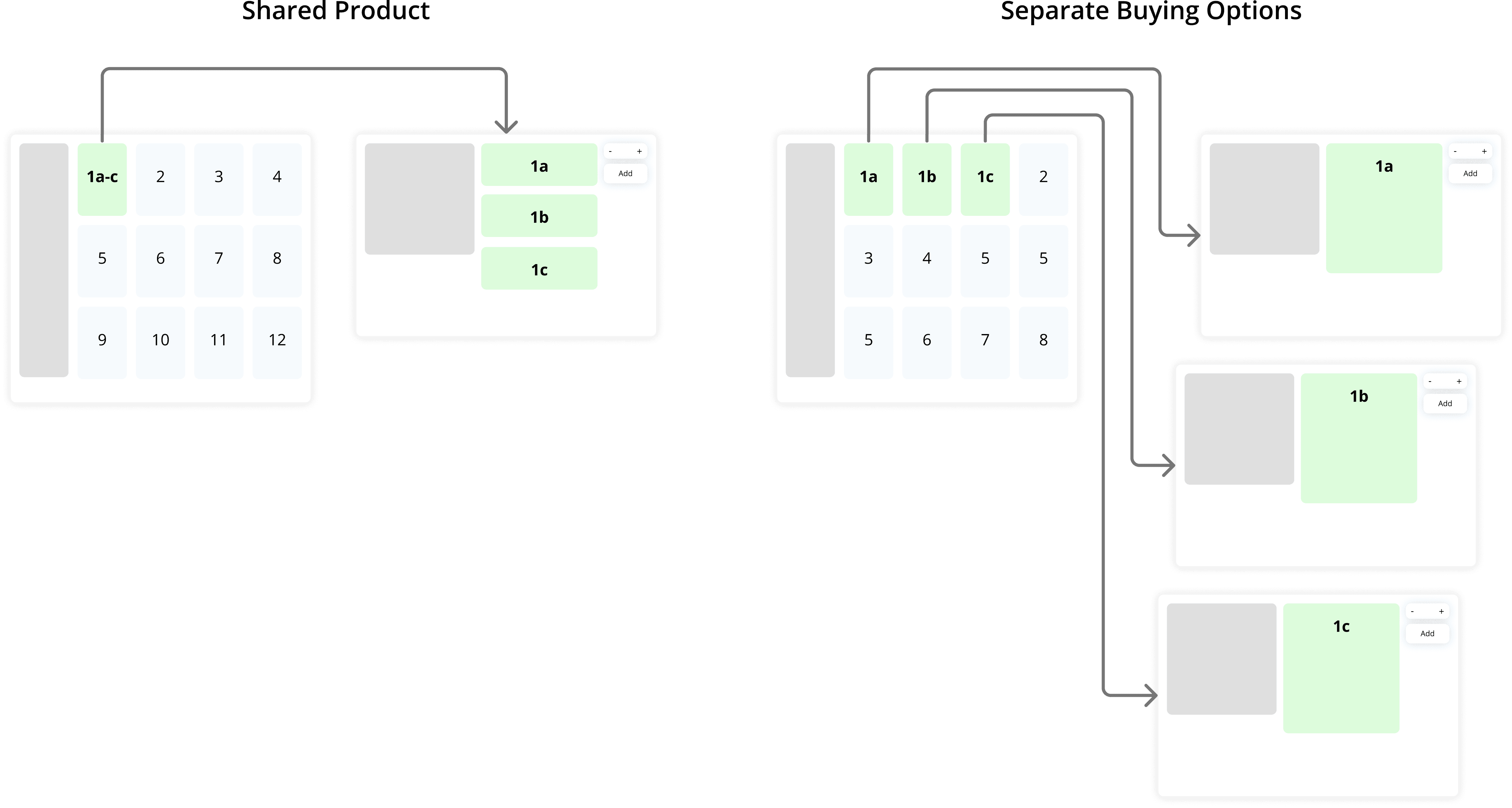
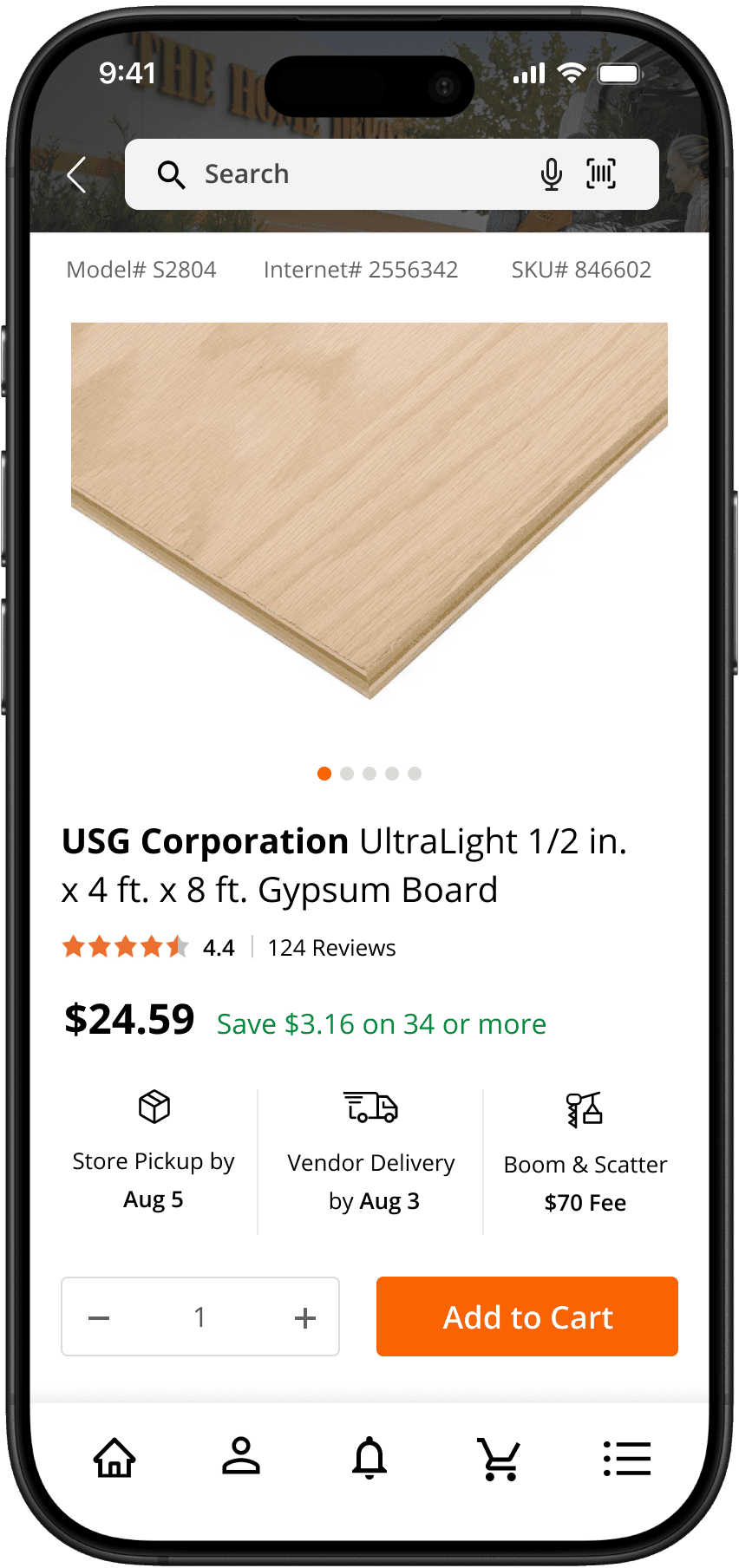
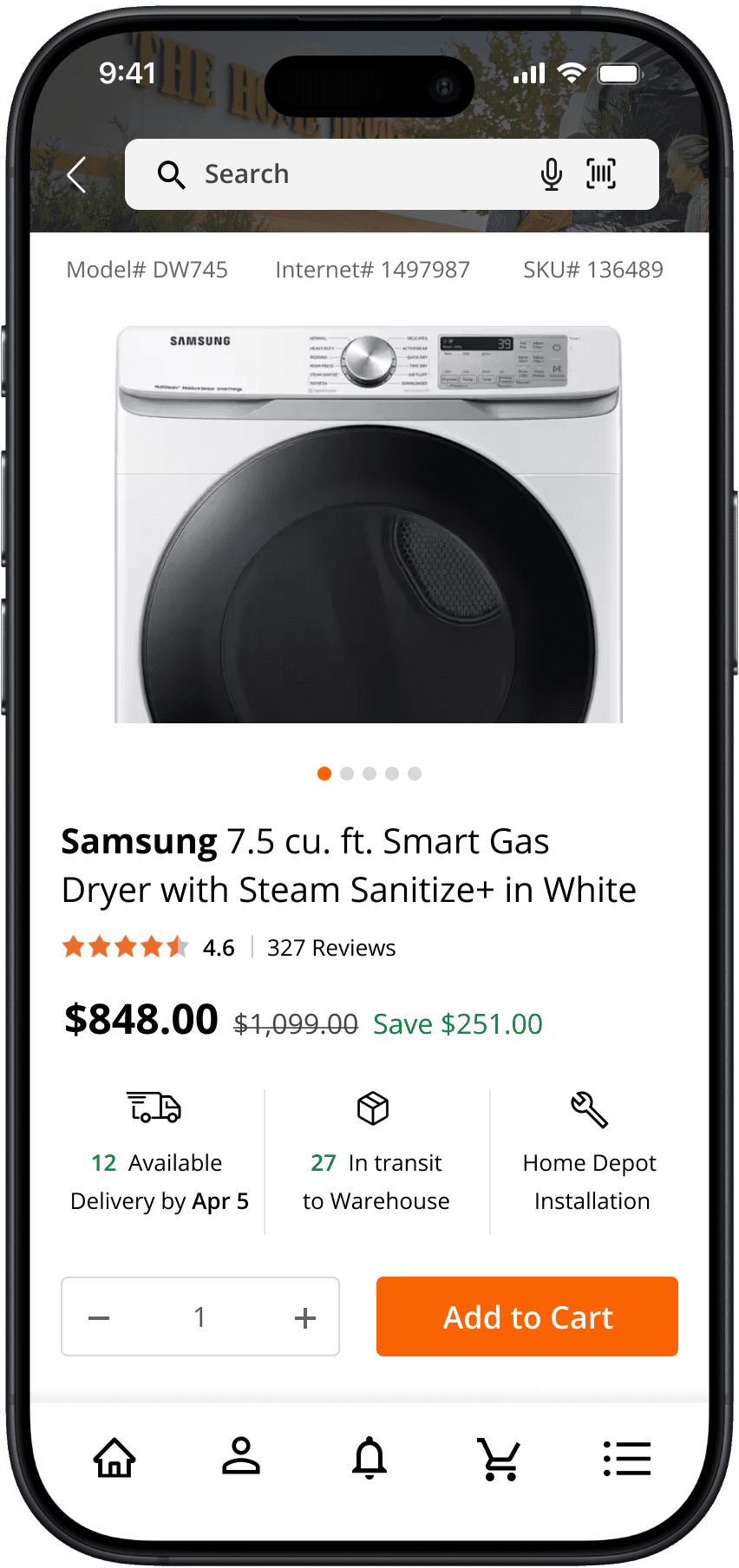
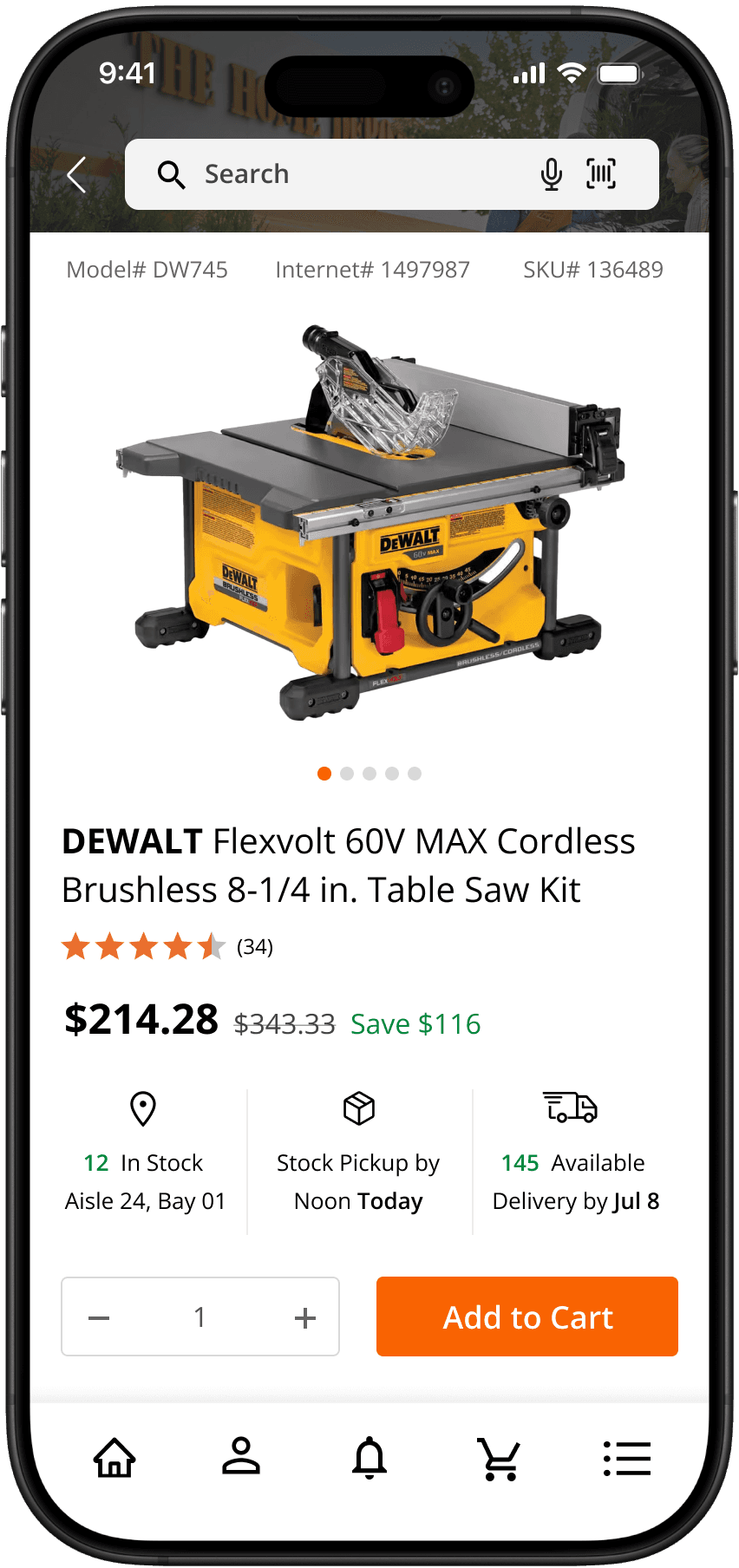
Supports multiple buying options within the same structure, enabling true omni-channel selling.

Supports multiple buying options within the same structure, enabling true omni-channel selling.

Services follow the same structure, allowing associates to move between products and services without switching context.

Services follow the same structure, allowing associates to move between products and services without switching context.

More complex scenarios expand within the same framework, avoiding the need for separate tools or flows.

More complex scenarios expand within the same framework, avoiding the need for separate tools or flows.

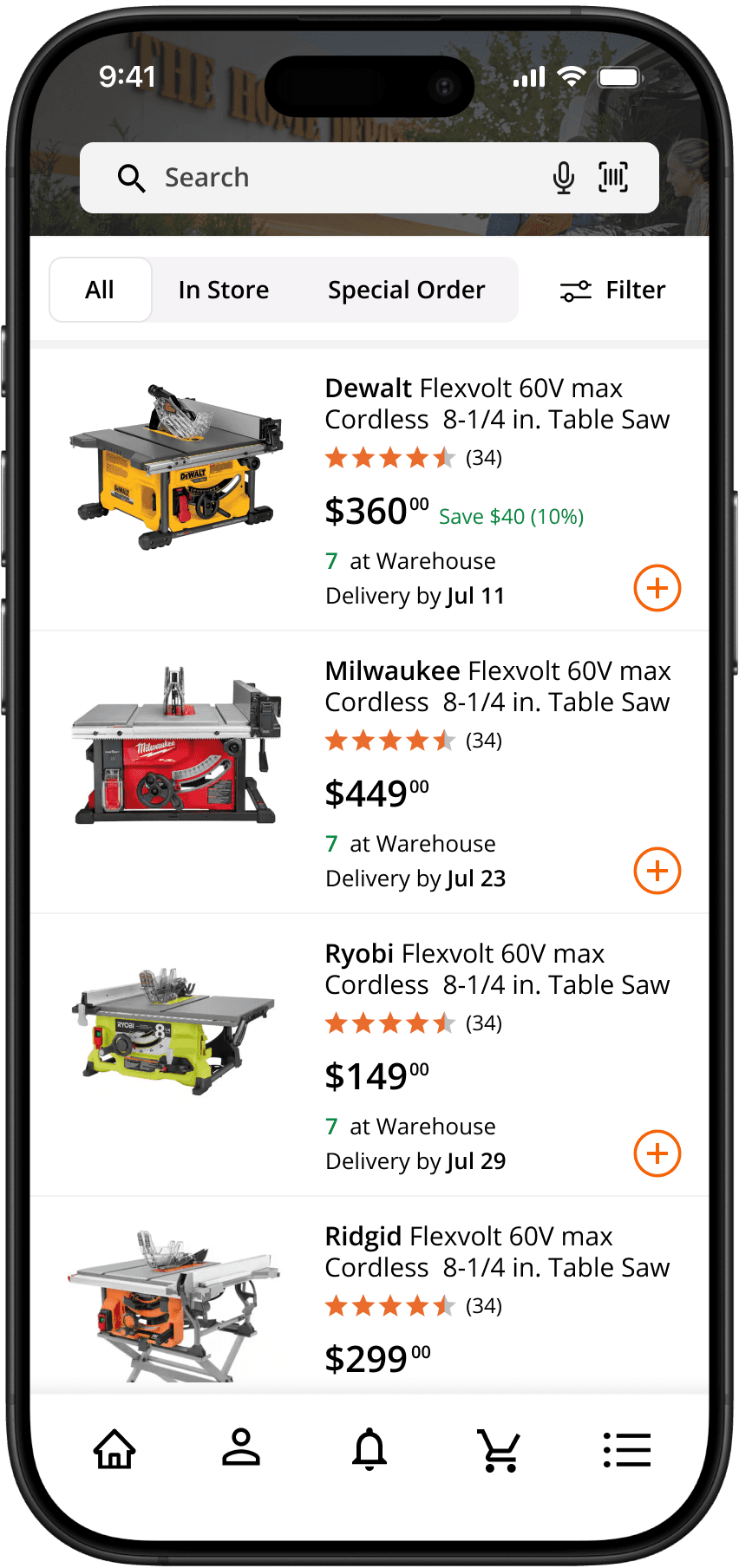
The same structure scales to mobile, maintaining consistency across devices.

The same structure scales to mobile, maintaining consistency across devices.

Shopping Cart

Shopping Cart

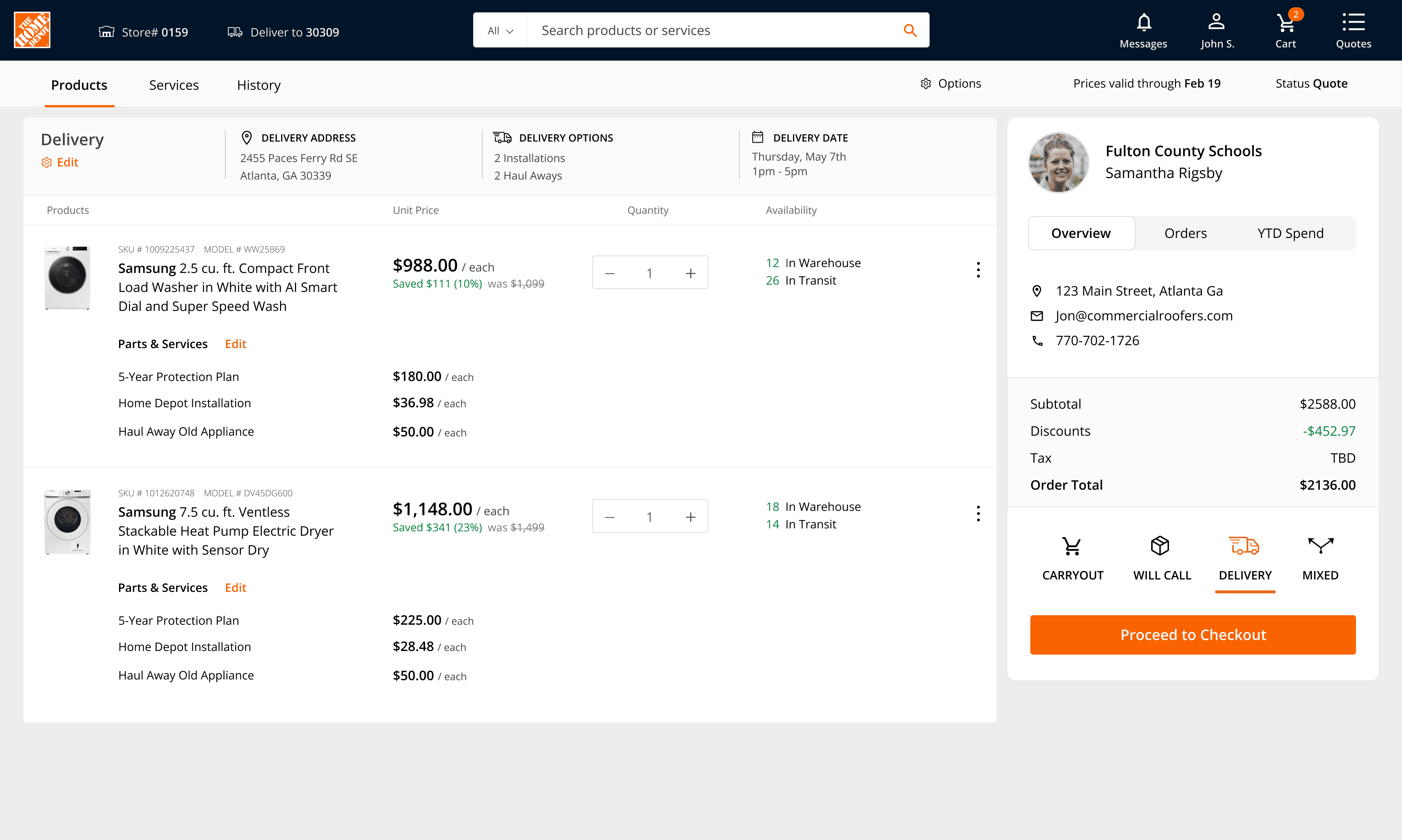
The cart is where associates spend most of their time building quotes and managing orders. It was designed to surface the most important information upfront while still supporting more complex scenarios as needed.

The cart is where associates spend most of their time building quotes and managing orders. It was designed to surface the most important information upfront while still supporting more complex scenarios as needed.

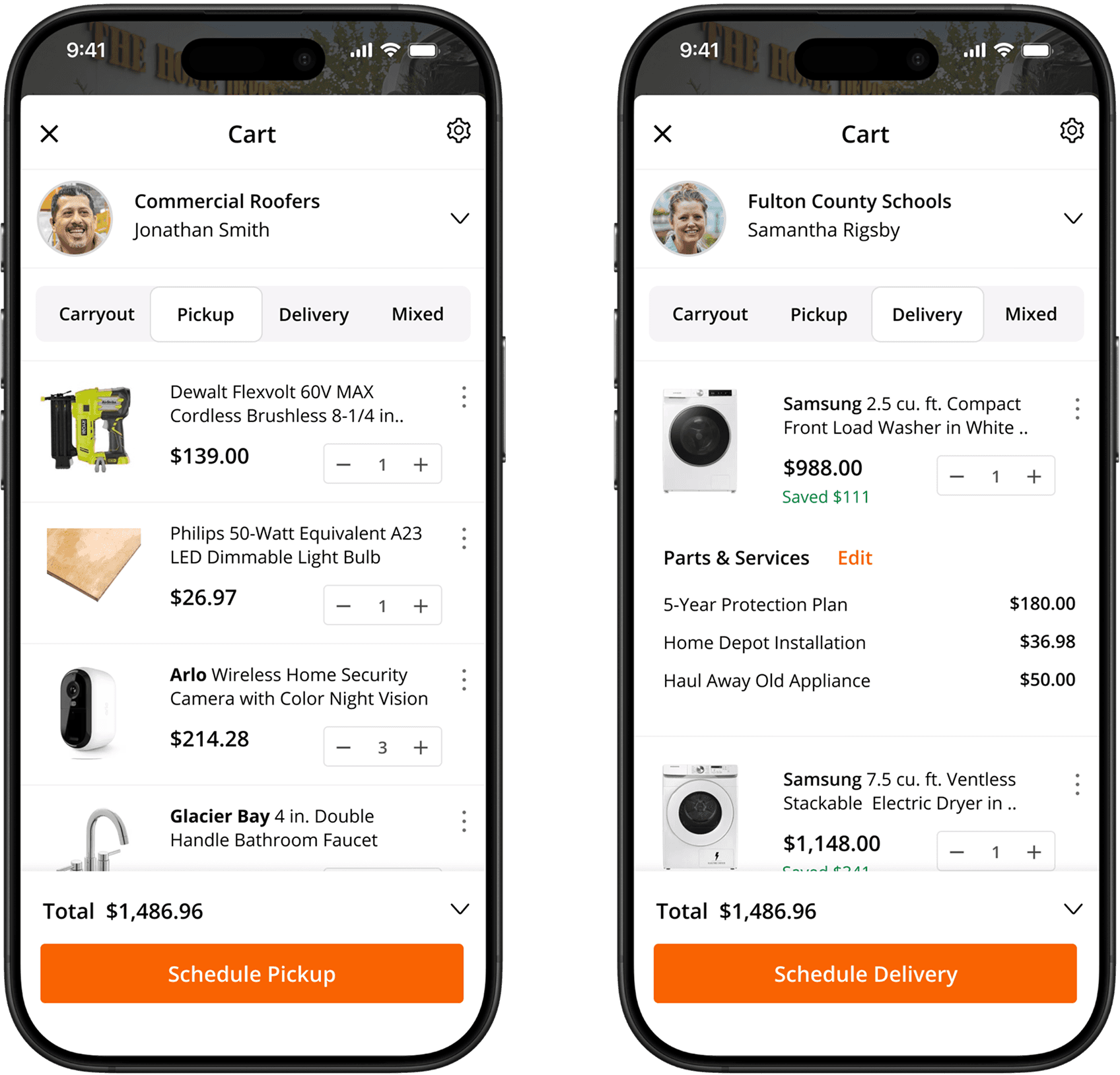
Associates can quickly understand who the customer is, what’s in the order, and how items are being fulfilled without digging through multiple views.

Associates can quickly understand who the customer is, what’s in the order, and how items are being fulfilled without digging through multiple views.

Actions are grouped into clear entry points at the cart and line level, matching how associates think about managing orders.

Actions are grouped into clear entry points at the cart and line level, matching how associates think about managing orders.

Fulfillment details are integrated directly into the cart, allowing associates to manage delivery, pickup, and mixed scenarios in one place.

Fulfillment details are integrated directly into the cart, allowing associates to manage delivery, pickup, and mixed scenarios in one place.

The same structure scales to mobile, supporting in-store workflows across devices.

The same structure scales to mobile, supporting in-store workflows across devices.

Customer

Customer selection was redesigned to reflect how Pro customers actually operate.


What initially looked like duplicate accounts turned out to be a workaround for managing multiple purchasers under a single company.


This led to a new model where a main account contains multiple purchasers, each with their own visibility and context within an order.

This approach became the standard for customer selection across the enterprise.

This approach became the standard for customer selection across the enterprise.

Outcomes & Impact

Outcomes & Impact

The system now supports over $24B in annual sales and fundamentally changed how selling works in stores. Workflows became faster and easier to navigate, reducing task time by ~40% and significantly reducing training time for new associates. Over a dozen legacy systems were replaced with a single platform, allowing associates to sell across channels in one place.

The platform scaled from a small pilot to all 2,000+ stores, supporting new initiatives without needing to be re-architected. Many of the patterns introduced became standards used across the enterprise.

The system now supports over $24B in annual sales and fundamentally changed how selling works in stores. Workflows became faster and easier to navigate, reducing task time by ~40% and significantly reducing training time for new associates. Over a dozen legacy systems were replaced with a single platform, allowing associates to sell across channels in one place.

The platform scaled from a small pilot to all 2,000+ stores, supporting new initiatives without needing to be re-architected. Many of the patterns introduced became standards used across the enterprise.